01
Custom Software Engineering
Line-of-business platforms, internal tools and product engineering built for maintainability and change.
KIP'S CANINE CLUB LIMITED
Enterprise Technology
Information Technology · Est. Engineering Practice
KIP'S CANINE CLUB LIMITED is an information technology company that designs, builds and safeguards software, cloud platforms and data systems for organisations that treat technology as a core operating asset.
Who we are
We work with organisations that need dependable software, resilient infrastructure and clear technical direction. Our practice spans the full digital stack — from product engineering and cloud architecture to data platforms and security operations — delivered by teams that treat reliability, clarity and maintainability as first-class outcomes.
We do not sell shortcuts. We design systems that will still make sense in five years, document them so teams can inherit them, and instrument them so operators can trust them under pressure. Every engagement is shaped around the client's actual operating context, not a packaged methodology.
Capabilities
01
Line-of-business platforms, internal tools and product engineering built for maintainability and change.
02
Reference architectures, migrations and platform engineering across major cloud providers.
03
Application security reviews, hardening, secure SDLC guidance and incident response support.
04
Warehouses, pipelines, semantic models and analytics products that survive contact with real operations.
05
Interface design for complex domains — dashboards, workflow tools and multi-role administrative systems.
06
Connecting legacy platforms with modern services through well-specified, observable interfaces.
Delivery model
STEP 01
We map the operational context, existing systems, constraints and the outcomes the initiative must produce.
STEP 02
Architecture, interface and data models are drafted, reviewed and pressure-tested against realistic scenarios.
STEP 03
Iterative engineering with continuous integration, code review and automated testing at every layer.
STEP 04
Instrumentation, documentation and handover so the system is observable, understood and safe to change.
Cloud technology
We treat the cloud as production infrastructure rather than a hosting bill. That means well-scoped landing zones, codified environments, cost visibility from day one and workloads designed to fail gracefully. Our teams design and operate platforms that carry the organisation forward without becoming a liability of their own.

Cybersecurity
Our security work is not a separate function bolted onto delivery. Threat modelling, secure defaults, dependency hygiene, secrets management and access controls are part of the way each system is engineered. When incidents happen, we help teams respond calmly and improve the underlying controls rather than treat the symptom.
Data & analytics
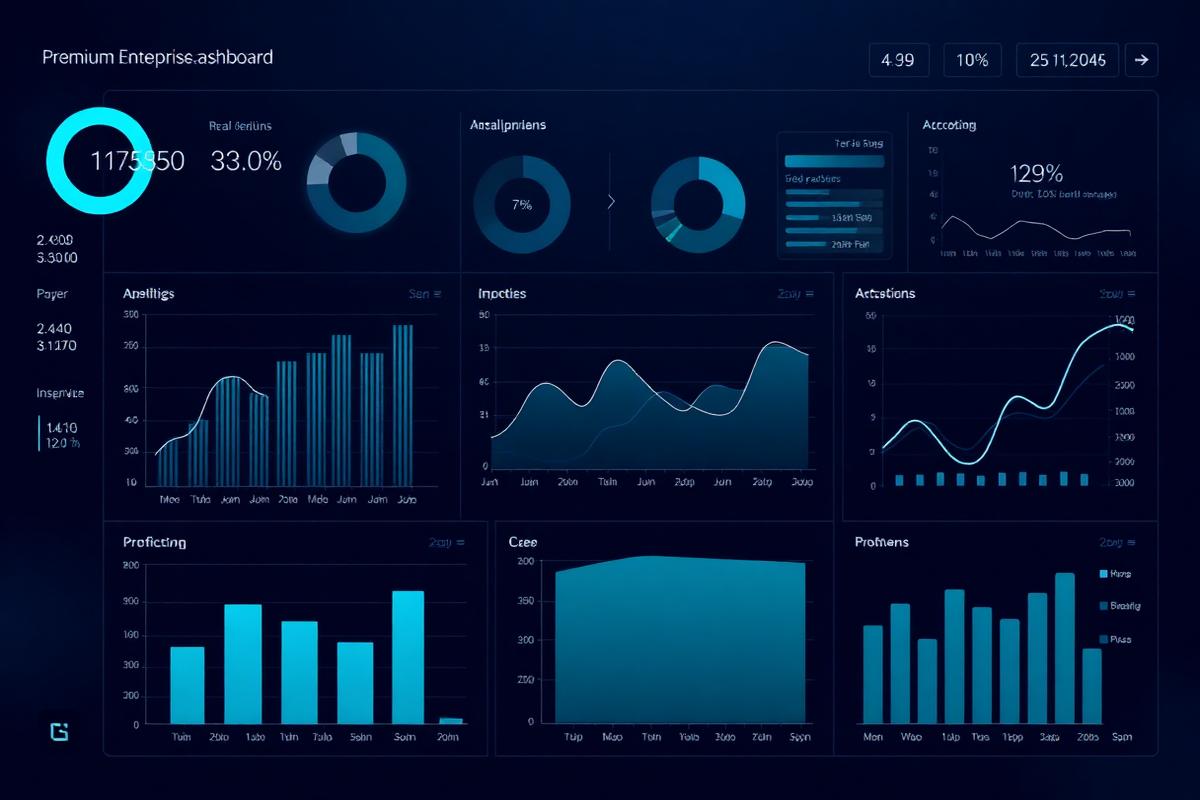
We build the data foundations that analytics products depend on: reliable ingestion, well-modelled warehouses, documented semantic layers and dashboards that speak to how the organisation actually works. Analytics only earns trust when the pipeline behind it does.
Digital transformation
Transformation is rarely a green-field exercise. We help organisations sequence modernisation carefully — replacing what genuinely needs replacing, extending what still delivers value, and connecting the two with well-defined interfaces so business continuity is never a casualty of the roadmap.

Environments we serve
Financial services and fintech
Logistics and supply chain
Healthcare and life sciences
Professional services
Manufacturing and industrial
Public sector and utilities
Retail and e-commerce
Software product companies
Technology stack
Modern web and mobile frameworks, typed languages, resilient service architectures.
Relational and analytical databases, streaming platforms, warehouse and lakehouse engines.
Container orchestration, infrastructure as code, CI/CD, observability and secrets management.
Quality assurance
Automated tests, static analysis, code review, staged rollouts and production observability are embedded in every engagement. The aim is a system whose behaviour is understood at every level, so defects are caught early and remediated at their root cause.
Automated testing
Unit, integration and end-to-end coverage tuned to the criticality of each subsystem.
Code review
Every change reviewed by an engineer other than the author, against explicit standards.
Static analysis
Type systems, linters and security scanners integrated into pull-request workflows.
Operational readiness
Runbooks, alerts and dashboards are delivered as part of the software itself.
Collaboration
Written where it aids clarity, spoken where it aids speed. No performative status theatre.
We work inside your issue tracker and repositories, not from a separate delivery silo.
Architecture, trade-offs and rationale are captured so future teams inherit context, not folklore.
Every engagement has a clearly defined outcome and a way to know when it has been achieved.
Frequently asked
We take on software engineering, cloud, security and data initiatives where the outcome is clearly defined and the client is prepared to work with us as an engineering partner rather than a body-shop supplier.
Yes. A significant portion of our work is embedded alongside in-house engineering teams, contributing to shared repositories, participating in code review and helping raise the overall engineering standard.
We select technologies for the problem at hand, favouring mature, well-supported tools with strong community backing. We do not standardise on a single stack across every engagement.
Each engagement begins with a discovery phase to understand context and constraints, then proceeds to a clearly-scoped body of work with defined deliverables, review points and completion criteria.
Where it fits the client's operating model, we provide continued engineering support, on-call assistance or maintenance retainers, always with explicit terms and response arrangements.
Please write to sandrahowa40@gmail.com with a description of the initiative, its context and any timing considerations.
Contact
General enquiries
For introductions, partnership questions and general information.
Project discussions
Please describe the initiative, its context, and the outcomes it needs to produce.
Support enquiries
For existing engagements, please reference the relevant project or system in your message.
Please write to sandrahowa40@gmail.com.